Analysing the water of our land
As we live deep in the countryside, creating our own nature reserve and trying to regenerate the land, access to water is crucial. Whether it is for our own consumption, irrigation of our trees and veggies garden, and wildlife, it all requires clean water.
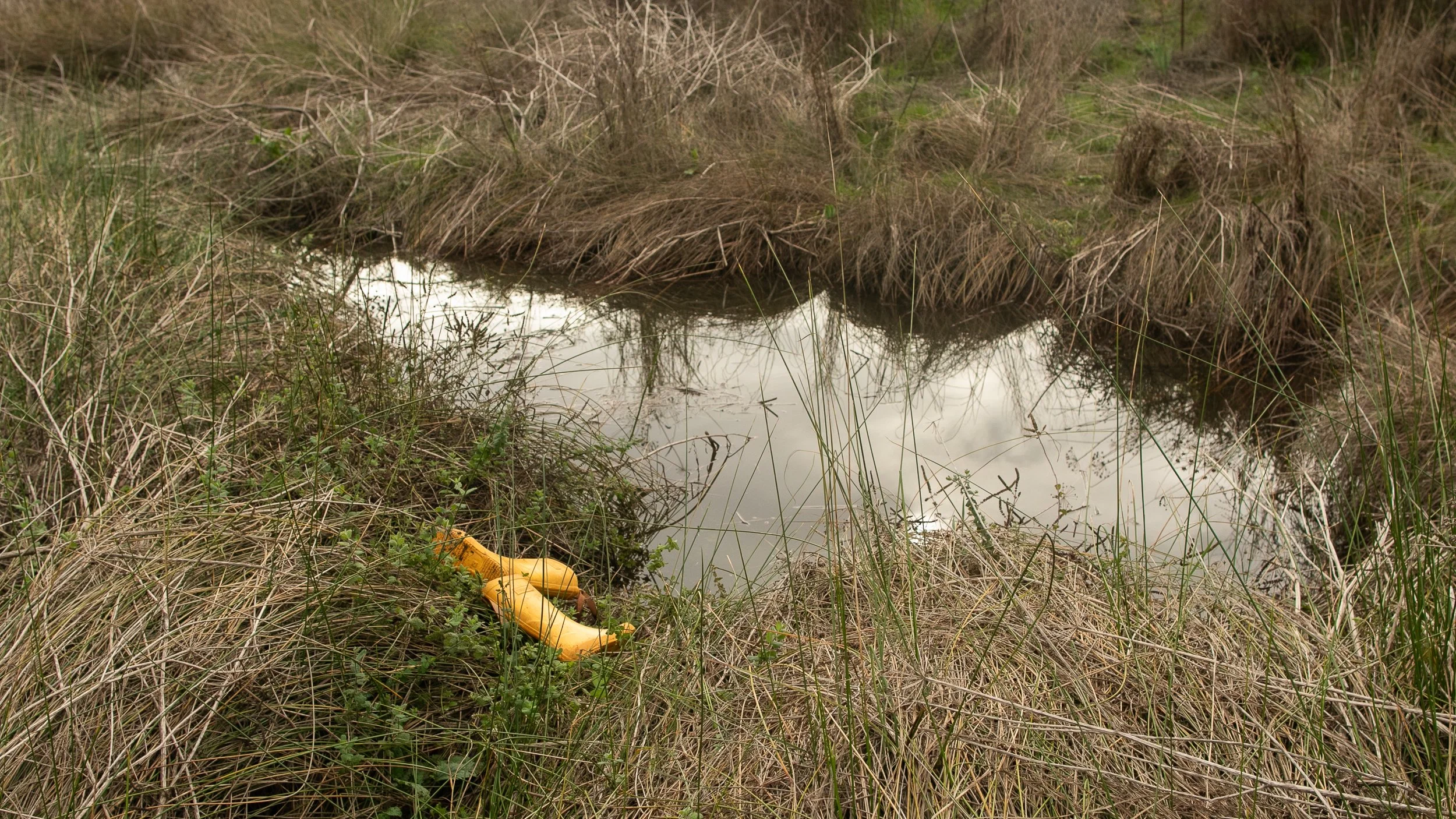
Our homestead’s water sources
On our family homestead in Alentejo, Portugal, we now have several water sources :
4 wells : these wells are small, only about 3 meters deep, and made of stones. One of these wells is connected to our house, and this is the water we use for everything : bathroom, kitchen, washing machine, etc..
1 borehole : we added a borehole on our land mainly to have more water security, in case our well runs dry, which actually happened our first summer here. Our borehole is 88 meters deep and has a flow of about 500 liters per hour. We have no idea how much water is available down there, and it is very important to limit to the minimum the use of this water.
1 pond : our big pond is also a source of water for us, as it allows us to irrigate our orchard slope. We want to install more tanks on different parts of the land and fill them with our pond water in winter, so that we can plant and irrigate more trees for their first 2 to 3 years, in order to boost their survival chances, by making sure they have enough water to get established.
So we feel we have great security now when it comes to access to water on our land, but we still cannot drink our water because we do not know if it is drinkable. Also, the city water will probably never come to our land, because of how isolated we are. And even if it did, we would rather rely on our own water.
Why we want to analyse our waters
We want to analyse our waters because our goal is simply to drink our own water. Why?
Because it would cut a significant expense from our monthly budget
Because it would eliminate a source of plastic pollution. Today, we buy gallons of water at the supermarket. Each one is 5 or 6 liters, and we use almost one per day.
Because it would increase our self-sufficiency, not having to rely or anybody or anything to access drinkable water.
Because we would potentially drink the highest quality of water available.
So we want to know what specifically needs to be done to reach that goal, which system we would need to put in place.
Analysing our waters
For the water analysis, we contacted a company in Algarve. We went there with samples of our well water and borehole water. As we got told, there would obviously be a lot of bacteria in our waters, so the analysis would be focused on the amounts of dissolved salts, ph and hardness. Having this information will then allow us to understand what would be the best solution to purify whether the borehole or well water so that we can start drinking it safely with full peace of mind.
Results
The results came instantaneously :
Well water:
300 ppm. Water with a total dissolved solids (TDS) level of 300 ppm is considered to have "good" quality, with acceptable mineral content and taste. Still, it seems that for water to be bottled and sold, it has to have a level inferior to 100 ppm.
PH 5. Water with a pH of 5 is acidic.
5 °dH. 5 °dH (degrees of German hardness) corresponds to soft water, which is a classification for water with a low concentration of dissolved minerals, primarily calcium and magnesium. It falls within the "soft" range
Borehole water:
1090 ppm. Water with 1090 ppm is considered unsafe to drink without treatment and likely has a high concentration of dissolved solids, which can be minerals, salts, or contaminants.
PH 7.5. Water with a pH of \(7.5\) is slightly alkaline (basic) and is within the ideal range for drinking water.
14 °dH. 14 °dH water is considered hard water, as it has a high concentration of minerals.
It turns out our borehole water has a better PH for drinking, but our well water is much better when it comes to purity. This is good news for us, as this is the water we already use in the kitchen. It means we do not necessarily need to connect the borehole water to the house. Nevertheless, as we know that the amount of water in our well is limited, especially in summer, we still feel like we will need to upgrade our system in the future somehow. But one thing at a time!
Also, we understand now that the well water is good enough for a Reverse Osmosis system to perform wonderfully on the long term. Reverse osmosis is a water purification process that uses a semi-permeable membrane to separate water molecules from other substances. You can have clean drinkable water directly in your kitchen by buying and installing a Reverse Osmosis system which includes an additional faucet that you put right by your sink.
Next step for our water system
So the next step for us would be to install a Reverse Osmosis system in our kitchen to purify the water from our well. There are many different brands and models, so we will have to do some market research to choose the best one for us. Once done, we will finally be able to drink our well water.
In a further future, once budget allows, we want to install a silo on top of our land to harvest rainwater, and link this silo to the house. This system would be gravity fed only, as the silo would be placed higher in altitude than the house, which means we would not need any pump and electricity to bring the water to our faucets. We would even keep our current connection to our well, and simply install a switch so that we can decide at any time whether to use the silo water or the well water.
More to come!
If you want to know more about our water systems on our family homestead, feel free to contact us.